


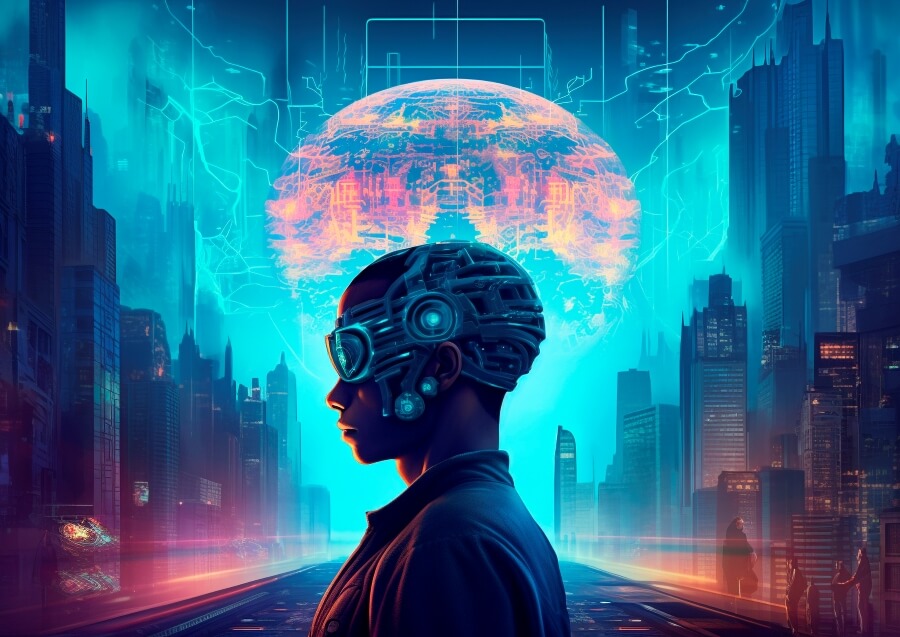
Artificial Intelligence (AI) has evolved rapidly over the past decade, transforming industries, reshaping societies, and redefining what is possible with technology.
As we move into 2026, AI is no longer just a buzzword—it is a strategic force that empowers businesses, augments human capabilities, and raises important questions about ethics, policy, and human-machine collaboration.
This blog explores the major trends and predictions shaping the future of AI in 2026, offering insights into technological advancements, societal impacts, industry transformation, and ethical considerations.
1. AI Takes Center Stage in Everyday Life
By 2026, AI is expected to be deeply embedded in daily routines, enhancing convenience, personalization, and accessibility across various platforms. Smart assistants go beyond basic tasks to proactively help plan schedules, anticipate needs, and enable intuitive voice-first experiences.
AI integration will span from health monitoring wearables to smart homes, delivering seamless interactions that adapt to user behavior.
Key Points:
- AI assistants become predictive instead of reactive.
- Personalized recommendations across shopping, entertainment, and productivity.
- AI-powered smart devices become more context-aware and intuitive.
Examples Include:
- Voice interfaces in public services
- AI that understands emotional context
- Smart home systems that learn lifestyle patterns
2. Generative AI and Content Creation Redefined
Generative AI transforms how content is produced, enabling machines to create text, images, audio, and even video that rival human creators. By 2026, generative models are expected to become faster, more accurate, and more customizable.
These systems power everything from high-quality marketing content to automated code generation, blurring the line between creative ideation and automated production.
Key Trends:
- Writers, artists, and designers collaborate with AI tools.
- Businesses use AI to scale content production.
- AI assists in storyboarding, concept design, and visual prototyping.
Benefits:
- Reduced time from ideation to execution
- Personalized, data-driven creative output
- Democratization of professional-grade content tools
3. AI in Healthcare: Personalized Medicine & Diagnostics
One of the most impactful areas of AI in 2026 is healthcare. AI is revolutionizing diagnostics, treatment planning, and personalized medicine, drastically improving patient outcomes.
Machine learning algorithms analyze vast medical datasets to identify patterns humans might miss. Predictive models assist clinicians in early disease detection, while AI-powered imaging tools help diagnose conditions like cancer with high precision.
Highlights:
- AI detects anomalies in imaging scans faster than traditional methods.
- Wearable AI monitors vital signs continuously.
- Personalized treatment plans based on genetic and lifestyle data.
Benefits to Patients:
- Faster diagnoses
- Reduced misdiagnosis
- Tailored treatment regimens
4. AI and the Workforce: Transformation & Reskilling
AI is reshaping the workforce, automating repetitive tasks and creating new roles that require higher-order cognitive skills. As AI tools take over routine work, humans are poised to focus on creativity, empathy, strategic thinking, and decision-making.
This shift drives the need for reskilling and lifelong learning programs to ensure workers remain competitive.
Key Workforce Impacts:
- Automation of administrative and routine tasks
- Rise in demand for AI literacy and digital skills
- Greater emphasis on interdisciplinary education
Reskilling Strategies:
- AI certification programs
- Industry-academia collaboration
- Micro-credentialing for specific skills
5. Responsible AI: Ethics, Governance, and Regulation
As AI becomes more pervasive, ethical considerations and governance frameworks are increasingly critical. Responsible AI focuses on transparency, fairness, accountability, and privacy.
By 2026, governments, corporations, and international bodies are expected to collaborate on regulatory standards that ensure AI systems are safe, unbiased, and aligned with societal values.
Core Ethical Themes:
- Mitigating algorithmic bias
- Ensuring data privacy and consent
- Transparent AI decision-making
Regulatory Focus Areas:
- AI certification and audit requirements
- Data protection laws adapted for AI
- Enforcement mechanisms for fairness standards
6. AI and Cybersecurity: A Double-Edged Sword
AI enhances cybersecurity capabilities by detecting threats in real time, predicting vulnerabilities, and automating responses to attacks. However, cybercriminals also use advanced AI tools to develop sophisticated threats.
By 2026, the cybersecurity landscape is expected to be an AI-driven arms race, where defenders and adversaries leverage intelligent systems to outmaneuver each other.
AI in Cyber Defense:
- Automated threat detection
- Behavioral analytics
- Real-time incident response
Threats Powered by AI:
- Adaptive phishing attacks
- AI-generated malware
- Deepfakes used for social engineering
7. AI in Finance: From Trading to Risk Management
Financial services were early adopters of AI, and by 2026, AI is deeply embedded in algorithmic trading, risk assessment, fraud detection, and customer service.
Machine learning models process vast amounts of market data instantaneously, enabling smarter investments and faster decision-making. AI tools also flag suspicious transactions with high accuracy, reducing fraud losses.
Major AI Uses in Finance:
- Predictive analytics for market trends
- Real-time risk monitoring
- Personalized financial advice
Advantages:
- Faster decision cycles
- Lower fraud rates
- Enhanced customer engagement
8. Autonomous Systems: Vehicles, Robots, and Beyond
Autonomous systems are advancing rapidly, with AI at their core. This includes self-driving vehicles, drone delivery networks, and robotic automation in manufacturing and logistics.
By 2026, autonomous technology aims to increase safety, lower costs, and improve efficiency in sectors like transportation, warehousing, and home services.
Applications of Autonomous AI:
- Delivery drones
- Self-driving cabs and trucks
- Warehouse robots
Benefits:
- Reduced human error
- Operational cost savings
- Enhanced scalability in logistics
9. AI for Social Good: Environment & Sustainability
AI is increasingly used to address global challenges like climate change, biodiversity loss, and disaster response. Intelligent systems help optimize energy use, model climate projections, and monitor ecosystems.
This trend aligns AI with sustainable development goals, turning data insights into actionable strategies for environmental protection.
AI in Sustainability:
- Predictive climate models
- Energy grid optimization
- Deforestation and wildlife monitoring
Outcomes:
- Reduced carbon footprints
- Better resource allocation
- Early warning systems for natural disasters
10. The Rise of Explainable AI (XAI)
As AI systems grow more complex, stakeholders demand clarity on how decisions are made. Explainable AI (XAI) focuses on making AI models and predictions transparent and interpretable.
By 2026, XAI will become a cornerstone of trust between users and AI systems—especially in critical domains like healthcare, law, and finance.
XAI Principles:
- Interpretability
- Traceable decision logic
- Transparent model behavior
Benefits:
- Increased user trust
- Easier regulatory compliance
- Better debugging and optimization
11. AI and Creativity: Expanding Human Expression
Artificial intelligence is not just analytical—it’s creative. By 2026, AI co-creates art, music, literature, and film, giving rise to new forms of human-machine collaboration.
AI tools help artists explore new aesthetics, enable musicians to compose with generative soundscapes, and assist filmmakers with storyboarding animation sequences.
Creative AI Use Cases:
- Music composition tools
- AI-assisted film editing
- Dynamic storytelling platforms
Benefits:
- Expanded creative potential
- Lower barriers to artistic creation
- Hybrid art forms blending human and machine imagination
12. Personalized User Experiences through AI
AI delivers highly personalized experiences across sectors like e-commerce, education, and entertainment. By analyzing user behavior, preferences, and historical data, AI systems tailor recommendations that feel intuitive and relevant.
This level of personalization fosters deeper engagement and more meaningful interactions between users and technology.
Personalization Examples:
- Personalized learning paths
- Adaptive UI/UX design
- Predictive shopping suggestions
Effects:
- Higher user satisfaction
- Better retention rates
- Increased conversion in digital services
13. AI and Quantum Computing: A Synergistic Frontier
One of the most future-focused trends is the convergence of AI and quantum computing. While quantum computers are still maturing, their potential to process complex calculations at unprecedented speeds could supercharge AI capabilities.
By 2026, early prototypes of quantum-accelerated AI models will emerge, particularly in research, cryptography, and optimization problems.
Quantum + AI Promises:
- Faster problem solving
- More powerful simulations
- Enhanced algorithmic efficiency
Long-Term Outlook:
- Complex system modeling
- Next-generation drug discovery
- Optimization of large interconnected networks
14. Democratization of AI: Accessibility & Inclusion
AI tools become more accessible to non-technical users through no-code or low-code platforms. This democratization enables startups, small businesses, educators, and hobbyists to build AI solutions without deep expertise.
Greater access also expands innovation globally, giving diverse communities tools to solve local problems.
Ways AI Becomes Accessible:
- No-code machine learning interfaces
- Plug-and-play AI APIs
- Built-in AI in common software platforms
Impact:
- Broader AI adoption
- Lower barriers to entry
- Increased global innovation
15. AI and Global Policy: International Collaboration
AI isn’t just a technological pursuit—it’s becoming a geopolitical priority. By 2026, nations will be drafting policies to govern AI development, trade, standards, and ethical norms.
International collaboration on AI regulations, data governance, and cross-border research is critical to balance innovation with safety and civil liberties.
Global Policy Themes:
- Shared standards for AI safety
- Negotiations on data sovereignty
- Multilateral research partnerships
Key Outcomes:
- Harmonized AI frameworks
- Reduced regulatory fragmentation
- Cross-border innovation ecosystem
Conclusion
The future of AI in 2026 is a landscape of profound transformation. From healthcare and education to creative arts and global policy, AI is reshaping how we work, live, and interact.
While the benefits are vast, responsible development, ethical oversight, and human-centric design remain essential to ensure that AI enhances human potential rather than undermines it.
As we approach 2026, it’s clear that AI will not just be a technological force but a cultural and economic one—driving innovation, empowering individuals, and redefining our collective future.
Frequently Asked Questions (FAQ)
Will AI take over jobs in the future?
AI will automate many routine tasks but is also expected to create new opportunities that require creativity, strategic thinking, and emotional intelligence. Reskilling and upskilling are key to adapting to this shift.
How is AI impacting healthcare by 2026?
AI supports early diagnosis, personalized treatment plans, and predictive analytics in healthcare. By 2026, it’s expected to substantially improve accuracy in diagnostics and optimize patient care pathways.
What are the main ethical concerns with AI development?
Major concerns include algorithmic bias, lack of transparency, data privacy issues, and the potential for misuse in surveillance or autonomous weaponry. Responsible AI governance and ethical frameworks are essential to address these issues.
How will AI change education in the coming years?
AI enables personalized learning experiences, automated grading, adaptive content delivery, and tools that support teachers in identifying student strengths and weaknesses for targeted interventions.
Is AI becoming more creative than humans?
AI can assist in creative processes, generating art, music, and design concepts. However, human creativity, driven by emotion, experience, and context, remains central. AI expands creative tools rather than replacing human ingenuity.